
One of Africa’s most powerful communication tools remains as relevant as ever: radio.
Radio continues to be the most widely used and accessible mass medium across the continent. It reaches more people than television, newspapers and the internet, with an estimated 65 – 80% of Africans listening regularly and over 68% accessing news through radio.
It remains especially important in rural and underserved communities, where internet access, data costs and infrastructure limitations affect who gets reached – and who gets left behind. Radio goes where newer technologies cannot. Beyond electricity. Beyond a mobile signal. Beyond literacy barriers. And that matters.
For organisations working on health, rights, governance and social justice, radio is still one of the most powerful ways to reach people.
Radio reaches where digital doesn’t
The digital shift has transformed communications. Social media, podcasts, online campaigns and digital storytelling offer new opportunities to inform, engage and mobilise audiences.
But as communications increasingly become digital-first, there is also a risk: communities without affordable internet access, reliable connectivity or digital tools can be excluded.
In many parts of Africa, radio is not only a source of information — it is sometimes the only one. Radio is local. It is trusted. It speaks people’s languages. It informs, educates and creates spaces for dialogue, participation and community connection.
Stories with a purpose
Radio has been a core part of CMFD Productions’ work for over 20 years. Working with NGOs, international agencies, governments and communities, we’ve produced radio dramas, documentaries and co-created stories across health, rights, governance, and other social issues.
Our productions start long before the first voice is recorded. They begin with research, listening and story gathering – understanding audiences, local realities and communication goals. Good radio stories feel real because they are grounded in lived experiences.
In most cases productions are accompanied by presenter guides, discussion materials, training and community engagement activities – helping stories move into conversation and action.
Three ways radio tells stories for purpose
Here’s three examples of how we’ve turned knowledge, advocacy and information into radio productions that reach.
- Connecting policy and advocacy to lived realities
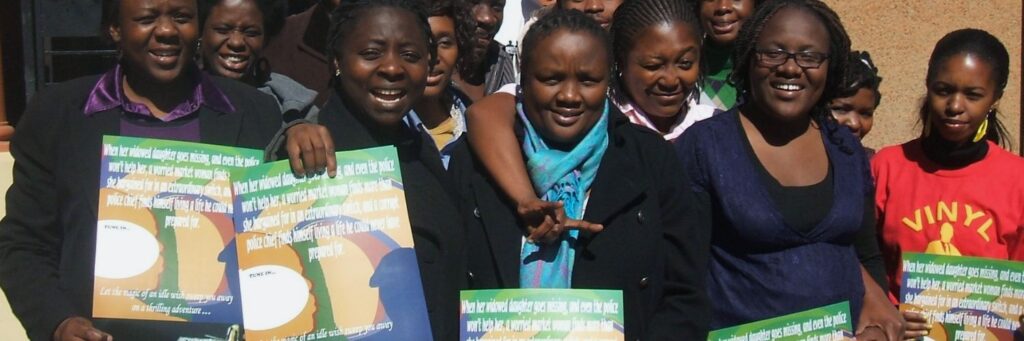
Radio can turn complex information – including policy and legal frameworks – into stories people understand and remember. Crossroads used an unexpected storyline – a market trader and corrupt policeman switching bodies – to spark conversations around women’s rights and the Maputo Protocol on the Rights of Women in Africa. Through humour, memorable characters and relatable experiences, the six-part drama connected rights and advocacy to everyday life. Adapted across countries and languages, it transformed policy into stories audiences could relate to and engage with.
- Bringing research to life
Radio can bridge the gap between research and people by revealing the human stories behind the data. Feeding Hungry Cities: Southern Africa Speaks on Food Security, a ten-part documentary series, brought food security research to life by combining expert interviews with the voices and experiences of growers, traders and families. The series captured the lived realities behind the findings, helping audiences understand not only the information, but why it matters – and what food insecurity means to lived realities. Research became stories, and stories generated understanding.
- Supporting access to care and services
Radio can do more than raise awareness – it can encourage people to seek help, access services and take action. Thuthuzeleka, a 13-part radio drama, promoted care for survivors of sexual assault and access to South Africa’s Thuthuzeleka Care Centres. The aim was not only to raise awareness, but to encourage access to support and create dialogue around sexual violence and survivor care. Combined with presenter training and support materials, the production helped extend conversations beyond the broadcast itself.
Radio with purpose
At a time when funding pressures affect both media – especially community-based outlets – and civil society organisations, digital platforms are often seen as the easier and more affordable communication choice.
Yet radio still reaches audiences that digital alone cannot. It’s true value lies not only in how far it reaches, but in its ability to connect deeply with communities, local voices and people’s experiences.
That is what makes radio powerful.
Looking to strengthen your communications?
CMFD Productions supports organisations with:
- communication strategy
- storytelling and content
- media and visibility
- training and capacity building
Get in touch: info@cmfdproductions.com